
Wednesday evening began like so many others. I logged into my DNA accounts to see whether any new matches had appeared. One match immediately caught my attention. “KM” shared 44 cM across three segments with my mother, 37 cM with me, and 28 cM with my mother’s brother. AncestryDNA correctly identified her as a maternal match, and I quickly noticed that many of my maternal grandmother’s relatives also shared DNA with her. Even my mother’s first cousin twice removed matched her at 67 cM.
With that amount of shared DNA, I felt confident that KM’s public family tree would reveal how we were connected. It certainly did—but not in the way I expected.
Her tree showed that her maternal grandfather was Joseph Burnett, born about 1897 in what is now Greenwood County, South Carolina. He died in Atlanta, Georgia, in 1940. The moment I saw the Burnett surname from that specific area, I knew I needed to investigate further.
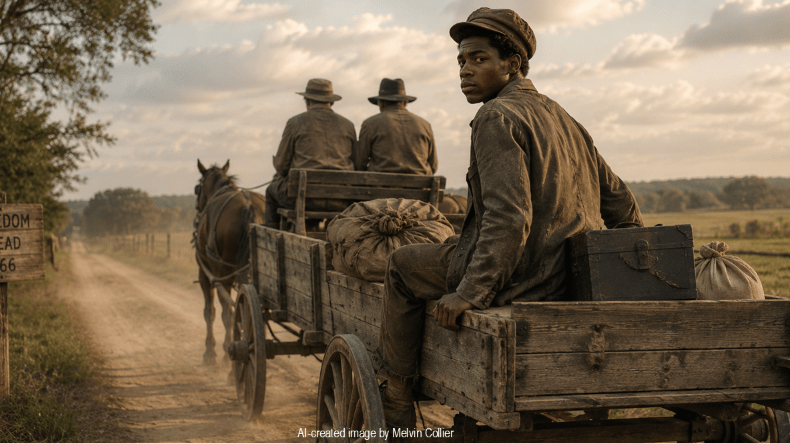
My maternal grandmother’s paternal grandfather, Hector Davis, was born around 1842 in the Smithville community of eastern Abbeville County, South Carolina, near Greenwood. That portion of Abbeville County became Greenwood County in 1897. Shortly before 1863, Hector’s enslaver, John Burnett, forcibly moved Hector, his documented parents Jack and Flora, and their children from South Carolina to near Como, Mississippi.
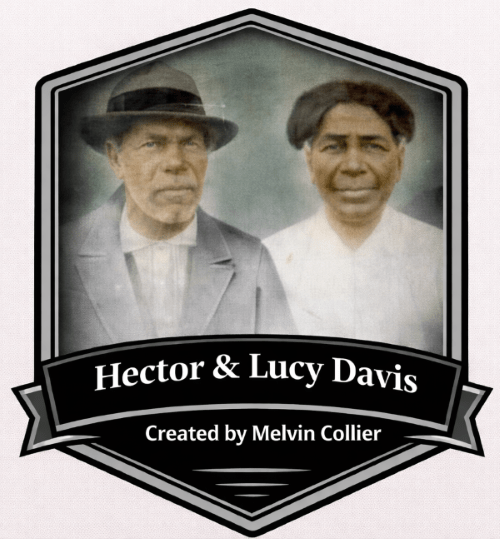
Back in 1993, I located Hector’s 1866 marriage record. On that record, his name appeared as “Hector Burnett” when he married my great-great-grandmother, Lucy Milam. That single document became the key that unlocked the identity of his enslaver, John Burnett, which eventually led me to his court records.
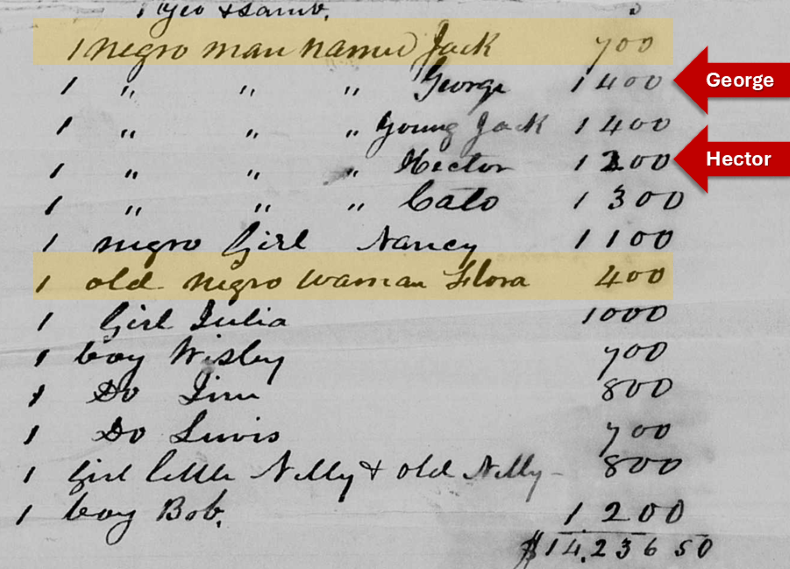
John Burnett died shortly after arriving in Mississippi on October 23, 1862, at the age of 67. Thankfully, his probate records included a slave inventory dated March 20, 1863. As painful and dehumanizing as those records are, they listed Hector, his parents Jack and Flora, and several of their children by name. See below. It was the first slave inventory I had ever found documenting members of my own family. When I discovered it at the DeSoto County Courthouse in 1998, I was overwhelmed with emotion.
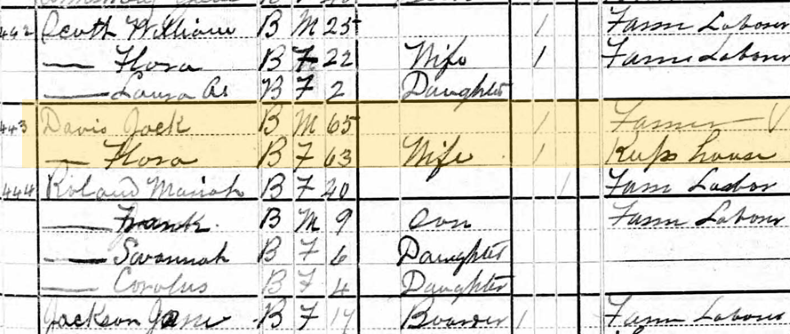
1880 Census, Panola County, Mississippi – the household of Jack Davis (Year: 1880; Census Place: Pleasant Mount, Roll: 661; Page: 70A). Jack and Flora Davis lived next door to their oldest daughter, Mariah Davis Roland, and Mariah’s daughter, Flora Roland Scott.
By 1870, Jack, Flora, and most of their children had abandoned the Burnett surname and adopted Davis instead. Only one exception stood out. Their son, Uncle Jack Davis Jr., was still enumerated as Jack Burnett in the 1870 census of DeSoto (now Tate) County, Mississippi.
But I had always wondered about another name on that inventory. Among the enslaved people listed was:
“Negro man named George — $1,400.”
For nearly thirty years, I suspected that George was another son of Jack and Flora. I simply had no idea what became of him. Until Wednesday night. After seeing KM’s Burnett family from the Greenwood area, I dug deeper into the records. Census records and Joseph Burnett’s death certificate identified his father as Mason Burnett. Mason was KM’s great-grandfather.
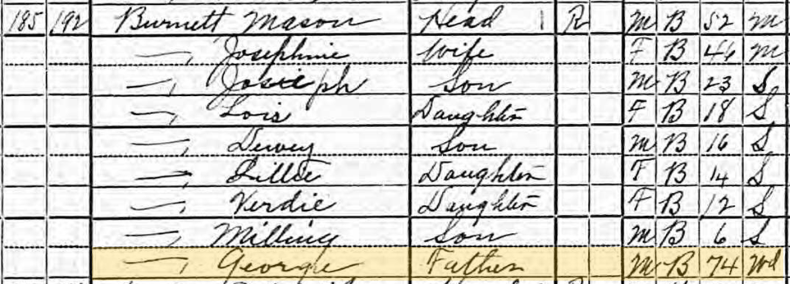
A breakthrough came when I found the 1920 census. Joseph, age 23, was living with his parents, Mason and Josephine Burnett. Also living in the household was Mason’s father, George Burnett, age 74. See below.
I traced George backward through the 1880 and 1870 censuses, where he was living in the Smithville community—the very place from which my family had been taken around the beginning of the Civil War. One detail especially caught my attention. George had named one of his sons Jack.
Then Ancestry provided a great hint – George Burnett’s death certificate. He died on March 6, 1920, in Greenwood County, only two months after being enumerated in the census. When I opened the death certificate, my mouth literally dropped open. His parents were listed as “Jack Burnett” and “Floride Davis.” See below.
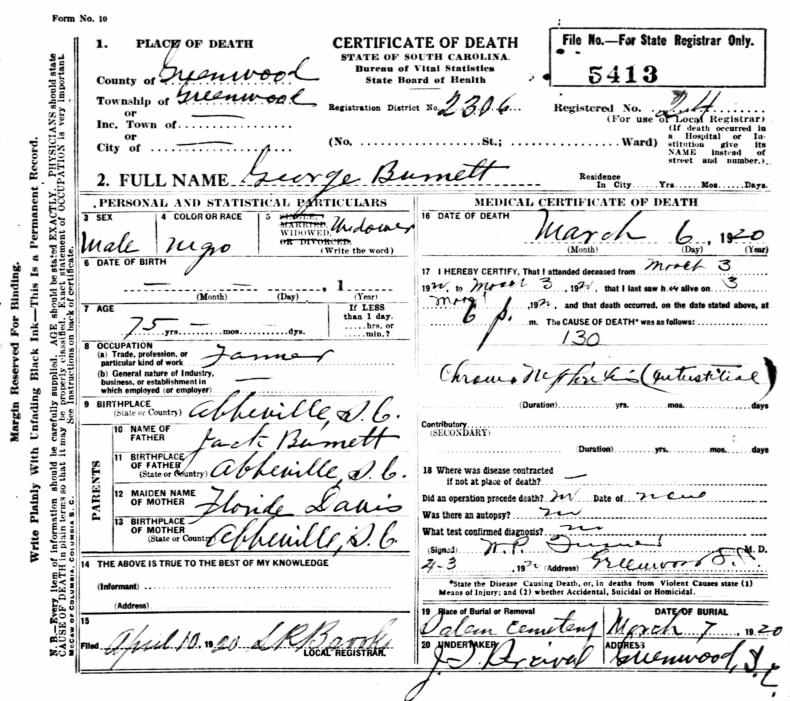
In that instant, I knew. I had finally found Uncle George. Unlike his parents and siblings, George had kept the Burnett surname throughout his life.
Unfortunately, the death certificate does not identify the informant. However, since George had been living with his oldest child Mason only two months earlier, I cannot help but wonder whether Mason supplied the information.
I imagine how that conversation may have unfolded.
The recorder may have asked:
“What were George’s father’s name and his mother’s maiden name?”
Perhaps Mason answered:
“Jack… and Flora Davis.”
The recorder may have interpreted that response by recording George’s father as Jack Burnett and his mother as Floride Davis.
Whether that is exactly what happened or not, one fact is unmistakable. The document not only confirmed why KM shares DNA with my family, but her DNA match ultimately solved a mystery that had lingered for nearly three decades. It revealed the fate of the man identified in 1863 only as “Negro man George.” Uncle George had returned to South Carolina.
Based on the birth years of his sons Mason and Jack, they were only toddlers when George was forcibly taken nearly 600 miles away to northern Mississippi. It is difficult to imagine the heartbreak he endured after being separated from his wife, Anne Horton, and their young children.
Then came freedom.
At some point after emancipation, George faced a very difficult decision: Either remain in Mississippi with his parents, brothers, and sisters, and perhaps start another family, or undertake the long journey back to South Carolina in hopes of reuniting with the family that slavery had stolen from him.
He chose home. He chose his wife. He chose his children. He walked away from one family in order to reclaim another. I imagine Anne was overjoyed when he unexpectedly walked through the door after his nearly 3-year absence. She likely never thought that she would ever see him again.
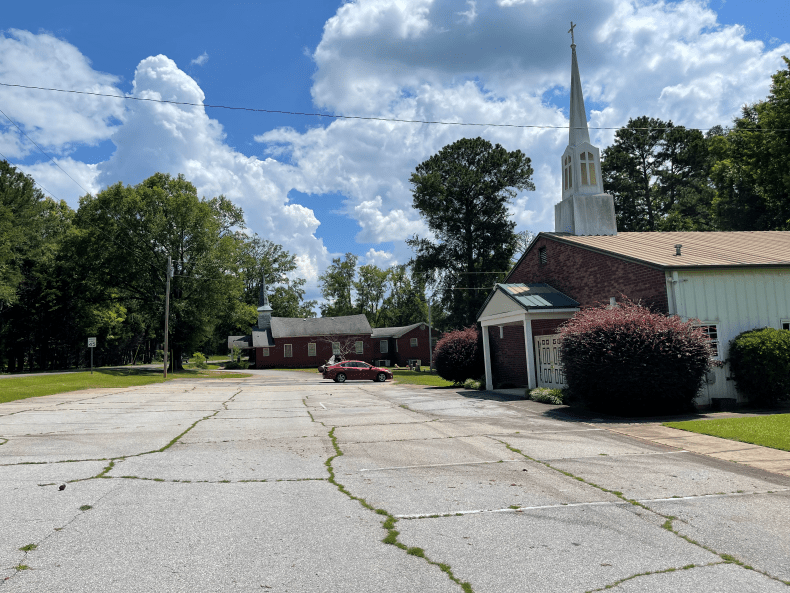
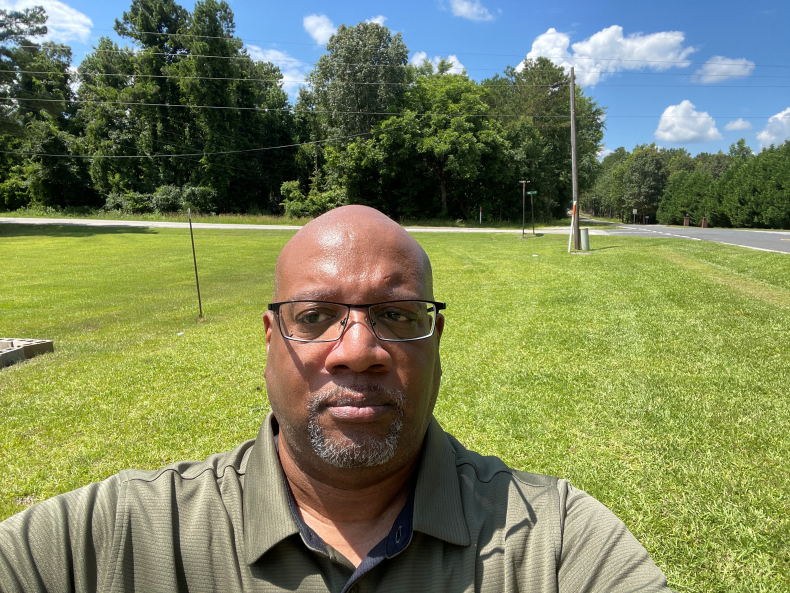
Last year, I visited the Smithville community simply to experience the place where my family’s story began. I stood at Allen Chapel AME Church, located less than a mile from where John Burnett’s farm once stood. See pictures below. Interestingly, the church’s founder, Peter Lomax, who was somehow a blood relative based on DNA evidence, lived near George in both the 1870 and 1880 censuses.
At the time, I had no idea that Uncle George had returned there after the Civil War or that he was buried nearby in Salem Cemetery. Had I known, I certainly would have attempted to find his grave. Still, there is something deeply satisfying about finally restoring him to his rightful place in our family history. I was delighted to add him and his family to my family tree.
1 July 2026: There’s more! Read “Hitting Pay Dirt: Mama Flora’s Family“.


Melvin, in the 1880 census for Jack and Flora did they decide to drop the Burnett names and use Flora’s maiden as their new surname?
LikeLike
Jack and Flora were listed as Davis in the 1870 census, although their son Jack Jr was listed as Burnett. The Davis name wasn’t connected to Flora because I have found Jack’s previous enslaver, who was a Davis. Before John Burnett brought them to Mississippi, he had not been the enslaver of Jack. Burnett was able to purchase him so that he wouldn’t be separated from Flora and their kids. So, that’s why they changed their name to Davis, which came from his original enslaver.
LikeLike
ohhhhh okay. Got it! Thanks. You really thoroughly explain these things.
LikeLike
You make this so immediate. “He chose home. He chose his wife. He chose his children.” It makes real the historical facts, and thank you for that.
LikeLike
Pingback: Hitting Pay Dirt: Mama Flora’s Family – Roots Revealed
Pingback: Friday’s Family History Finds | Empty Branches on the Family Tree